Molecular biology reagents are the backbone of genetic research, molecular diagnostics and the development of advanced therapies. Their correct conservation and handling directly determines the accuracy of experimental results and the reproducibility of assays.
What Are Molecular Biology Reagents?
They are specialized chemical and biological compounds used to manipulate, analyze and amplify nucleic acids (DNA and RNA). They include enzymes, buffers, nucleotides, primers and various components essential for techniques such as PCR, sequencing and cloning.
Critical Temperature Ranges
- -80°C: Highly sensitive enzymes, RNA samples
- -20°C: Taq polymerase, primers, dNTPs, restriction enzymes
- 4°C: Buffers, working solutions, culture media
- Room temperature: Salts, some lyophilized buffers
Main Reagents and Their Storage Temperatures
1. PCR Enzymes
Taq DNA Polymerase
Temperature: -20°C
Thermostable enzyme isolated from Thermus aquaticus. Synthesizes DNA from single-stranded templates. Optimal activity at 72°C. Half-life of 40 minutes at 95°C.
Pfu DNA Polymerase
Temperature: -20°C
From Pyrococcus furiosus. High fidelity with 3'→5' exonuclease activity. Ideal for cloning where precision is required. Slower than Taq.
Hot Start Polymerases
Temperature: -20°C
Modified enzymes that require an initial thermal activation. They reduce nonspecific amplification and the formation of primer dimers.
Reverse Transcriptase
Temperature: -20°C to -80°C
Converts RNA into complementary DNA (cDNA). Essential for RT-PCR. Very sensitive to freeze-thaw cycles.
2. Nucleotides (dNTPs)
Deoxynucleotide triphosphates are the building blocks of DNA during synthesis:
| Nucleotide | Full Name | Temperature | Stability |
|---|---|---|---|
| dATP | Deoxyadenosine triphosphate | -20°C | 1-2 years |
| dTTP | Deoxythymidine triphosphate | -20°C | 1-2 years |
| dGTP | Deoxyguanosine triphosphate | -20°C | 1-2 years |
| dCTP | Deoxycytidine triphosphate | -20°C | 1-2 years |
3. Primers and Oligonucleotides
Short synthetic DNA sequences that initiate replication at specific sites:
Lyophilized Storage
Lyophilized primers can be stored at -20°C for years. Reconstitute with nuclease-free water or TE buffer.
Stock Solution (100 µM)
Store at -20°C. Avoid repeated freeze-thaw cycles. Prepare working aliquots.
Working Solution (10 µM)
Can be kept at 4°C for 1-2 weeks. For prolonged use, store at -20°C.
4. Restriction Enzymes
Endonucleases that cut DNA at specific recognition sequences:
| Enzyme | Cut Sequence | Optimal Temperature | Storage |
|---|---|---|---|
| EcoRI | G↓AATTC | 37°C | -20°C in 50% glycerol |
| BamHI | G↓GATCC | 37°C | -20°C in 50% glycerol |
| HindIII | A↓AGCTT | 37°C | -20°C in 50% glycerol |
| NotI | GC↓GGCCGC | 37°C | -20°C in 50% glycerol |
| XhoI | C↓TCGAG | 37°C | -20°C in 50% glycerol |
5. Buffers and Solutions
PCR Buffer (10X)
Typical composition:
100 mM Tris-HCl (pH 8.3), 500 mM KCl, 15 mM MgCl₂. Store at -20°C.
TE Buffer
Composition:
10 mM Tris-HCl (pH 8.0), 1 mM EDTA. For resuspending DNA. Store at 4°C or room temperature.
TAE/TBE Buffer
Use:
Agarose gel electrophoresis. TAE: better for DNA extraction. TBE: better resolution. Room temperature.
MgCl₂ (25-50 mM)
Function:
Essential cofactor for polymerases. Optimal concentration: 1.5-2.5 mM final. Store at -20°C.
Fundamental PCR Procedures
The Polymerase Chain Reaction (PCR) is the most widely used technique in molecular biology. It allows millions of copies of a specific DNA sequence to be amplified.
PCR Thermal Cycle
1. Denaturation (94-98°C)
Separation of the two DNA strands. Duration: 15-30 seconds. The high temperature breaks the hydrogen bonds between complementary bases.
2. Hybridization/Annealing (50-65°C)
The primers bind to their complementary sequences. The temperature depends on the Tm of the primers. Duration: 15-60 seconds.
3. Extension (72°C)
The polymerase synthesizes the new DNA strand. Speed: ~1000 bp/minute for Taq. Duration depends on the size of the amplicon.
Standard PCR Protocol
- Initial denaturation: 95°C for 2-5 minutes
- 25-35 cycles of:
- Denaturation: 95°C for 30 seconds
- Annealing: 55-60°C for 30 seconds
- Extension: 72°C for 1 min/kb
- Final extension: 72°C for 5-10 minutes
- Hold: 4°C indefinitely
Typical PCR Reaction Mix (50 µL)
| Component | Volume | Final Concentration |
|---|---|---|
| PCR Buffer 10X | 5 µL | 1X |
| MgCl₂ (25 mM) | 3 µL | 1.5 mM |
| dNTPs (10 mM each) | 1 µL | 200 µM each |
| Forward Primer (10 µM) | 2 µL | 0.4 µM |
| Reverse Primer (10 µM) | 2 µL | 0.4 µM |
| Taq Polymerase (5 U/µL) | 0.25 µL | 1.25 U |
| DNA template | 1-5 µL | 10-100 ng |
| Nuclease-free water | up to 50 µL | - |
Common Errors and Solutions
No Amplification
Causes: Degraded primers, inactive enzyme, insufficient MgCl₂, poor quality DNA.
Solution: Check storage, use fresh reagents, optimize Mg²⁺ concentration.
Nonspecific Bands
Causes: Annealing temperature too low, excess of primers or MgCl₂.
Solution: Increase annealing temperature, use Hot Start, reduce cycles.
Primer Dimers
Causes: Complementarity between primers, excess of primers.
Solution: Redesign primers, use Hot Start polymerase, reduce concentration.
Best Storage Practices
-20°C Freezers
- Maintain a stable temperature (±2°C)
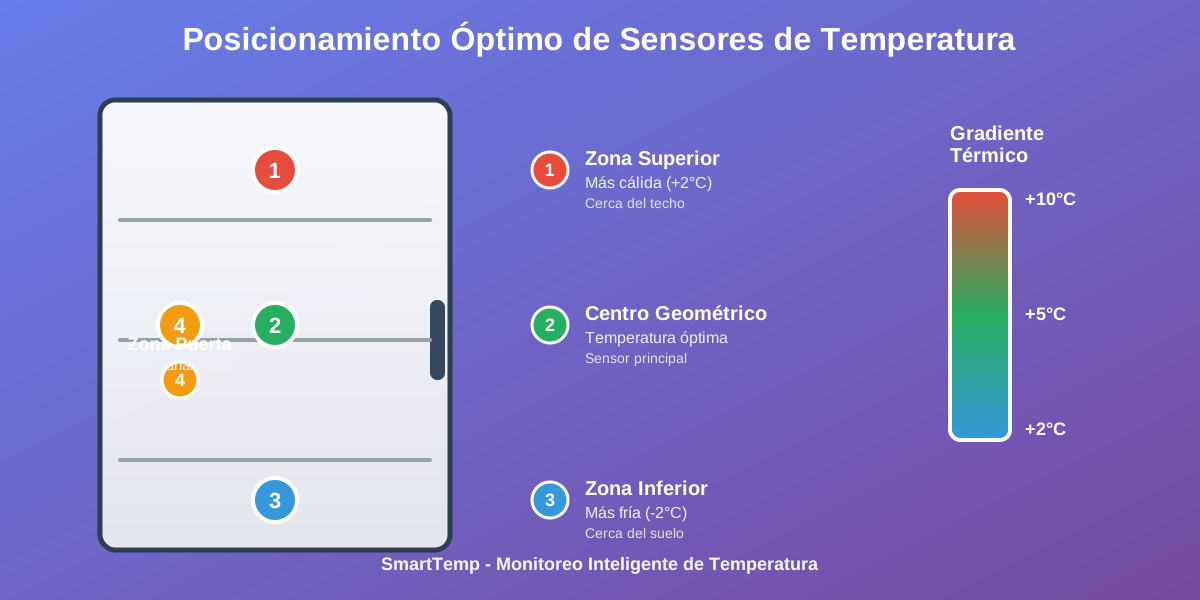
- Avoid placing reagents in the door
- Organize by type and expiration date
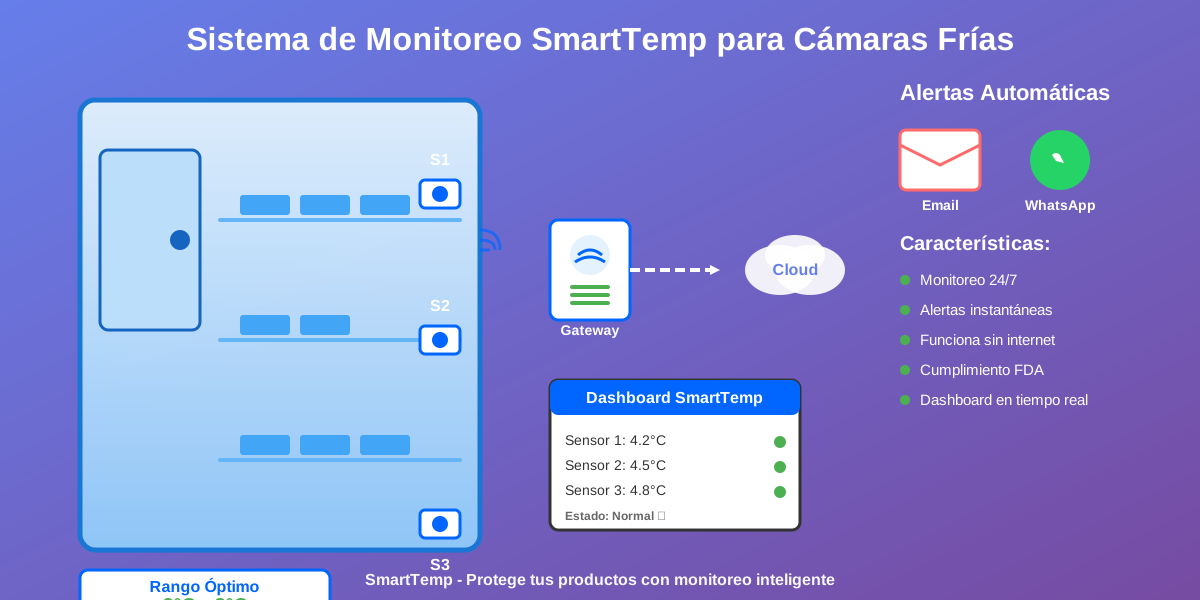
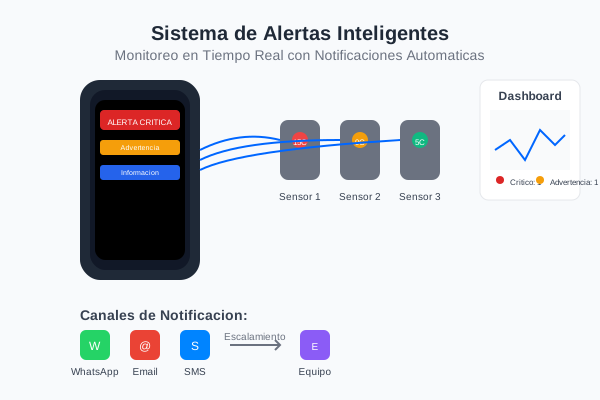
- Continuous monitoring with automatic alerts
-80°C Ultra-Low Freezers
- Reserve for the most sensitive reagents
- Minimize door-open time
- Use labeled organizer boxes
- Mandatory power backup
Key Recommendations
- Aliquot: Divide reagents into small portions to avoid freeze-thaw cycles
- Label: Date of receipt, date of opening, concentration, lot number
- Document: Record every use and storage conditions
- Monitor: 24/7 alert systems to detect temperature failures
- Validate: Periodically verify enzyme activity with positive controls
Importance of Temperature Monitoring
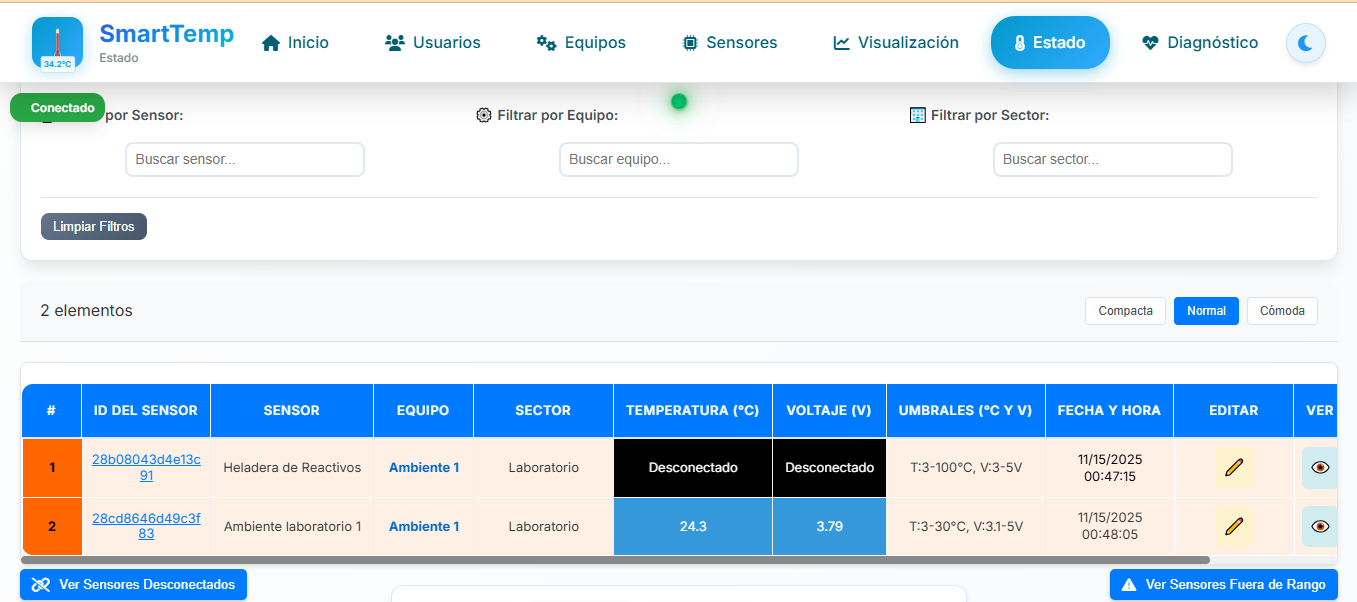
A continuous monitoring system is essential to protect the investment in reagents and ensure reproducible results. Temperature failures can occur at any time:
Need to monitor your laboratory reagents?
SmartTemp offers specialized wireless sensors for laboratory freezers with 24/7 alerts and compliance with ISO 15189 and CAP standards.
Request Information