The cold chain is critical worldwide in the pharmaceutical industry and molecular biology laboratories. A single failure in temperature control can compromise the efficacy of medicines, reagents and biological products valued at millions of dollars and, more importantly, put patients' health at risk around the world.
What Is the Pharmaceutical Cold Chain?
The pharmaceutical cold chain is the storage and distribution system that keeps temperature-sensitive products within specific ranges from manufacturing to the point of administration to the patient.
Critical Aspects in Latin America
- Significant losses of vaccines due to temperature problems in Latin America
- Millions of dollars are lost each year due to cold chain failures in the region
- 2-8°C is the critical range for most vaccines
International Regulatory Requirements
World Health Organization (WHO)
The WHO establishes that all biological products must be kept between 2°C and 8°C, with continuous monitoring and complete documentation of the thermal chain of custody.
FDA (United States)
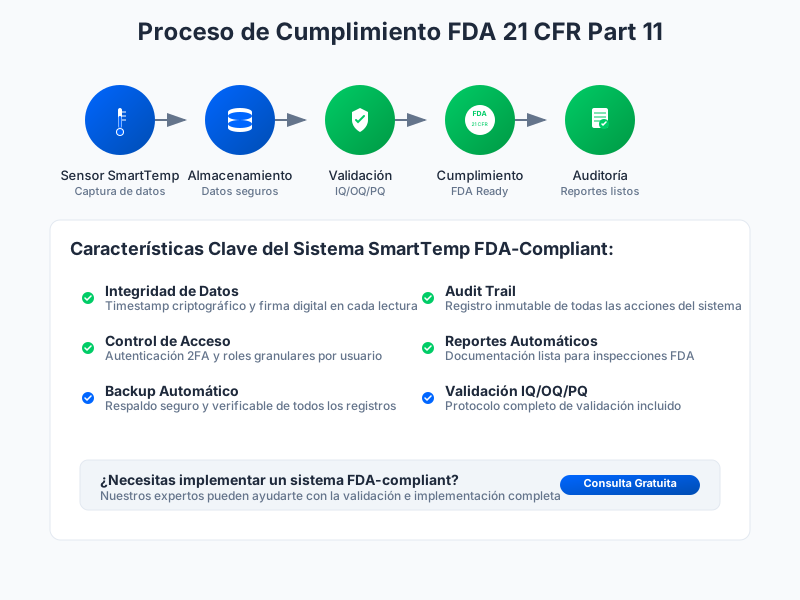
The FDA requires complete thermal validation, automatic alarm systems and response procedures for temperature deviations documented in the quality plan.
EMA (Europe)
The European Medicines Agency requires complete traceability, regular equipment calibration and staff trained in cold chain handling.
Critical Monitoring Zones
Central Warehouses
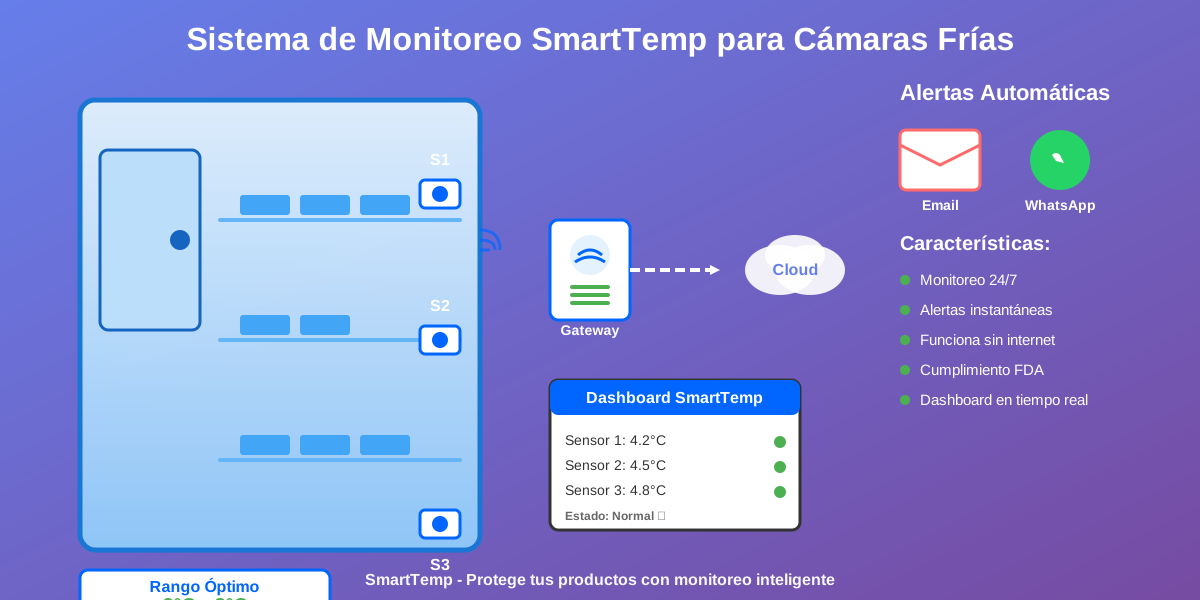
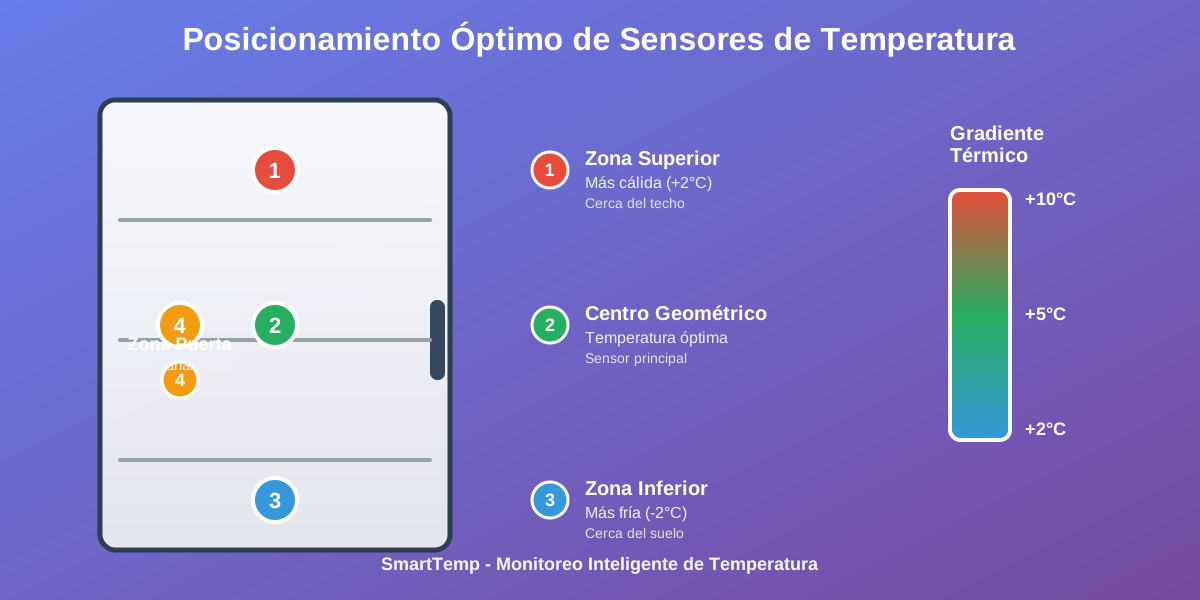
Large-capacity refrigerators and freezers require multiple monitoring points to ensure thermal uniformity.
Transport
Refrigerated vehicles with integrated GPS monitoring and real-time alerts during transit.
Dispensing Points
Pharmacies and hospitals need local monitoring with integration into central management systems.
Molecular Biology Reagents and Specialized Thermal Control
Molecular biology reagents represent one of the most critical segments in temperature control, since their stability directly determines the accuracy of medical diagnostics, genetic research and the development of advanced therapies.
Types of Critical Reagents
PCR Enzymes
Range: -20°C to -80°C
Thermostable polymerases for DNA amplification. Irreversible loss of activity from thermal fluctuations.
Monoclonal Antibodies
Range: 2°C to 8°C
Reagents for immunoassays and cytometry. Protein aggregation from inadequate temperature.
Oligonucleotides
Range: -20°C
Primers and probes for sequencing. Degradation by hydrolysis at room temperature.
Culture Media
Range: 2°C to 8°C
Specialized substrates for cell growth. Microbial contamination from elevated temperature.
Specific Challenges in Laboratories
Thermal Variability
Laboratory freezers can have differences of up to 10°C between compartments, affecting the homogeneity of storage.
Thaw Cycles
Sensitive reagents require controlled thawing. Multiple cycles can reduce activity by up to 50%.
Continuous Monitoring
Laboratories operate 24/7 but staff do not. Failures at night or on weekends can go unnoticed.
Specialized Monitoring Solutions
Multi-Point Sensors
- Up to 8 measurement points per unit
- 0.1°C resolution for maximum precision
- Differentiated alerts by reagent type
- Integration with LIMS systems
Predictive Analysis
- Early detection of equipment failures
- Prediction of reagent shelf life
- Inventory optimization by stability
- Thermal trend reports
Regulatory Compliance for Laboratories
Case Study: Molecular Diagnostics Laboratory
Problem
A laboratory was losing $15,000 per month in reagents due to freezer failures during weekends. Inconsistent PCR results affected diagnostics.
SmartTemp Solution
Implementation of 12 wireless sensors with 24/7 alerts and automatic power backup. Differentiated monitoring by reagent type.
Results
- 95% reduction in reagent losses
- 40% improvement in assay reproducibility
- ROI recovered in 4 months
- ISO 15189 certification obtained
Wireless IoT Sensor Technology
Modern wireless sensors use advanced IoT technology for real-time monitoring. The technical specifications include:
| Feature | Traditional Sensors | SmartTemp Wireless |
|---|---|---|
| Installation | Requires wiring | Plug & Play |
| Monitoring | Local only | Remote 24/7 |
| Alerts | Local alarms | SMS, Email, WhatsApp |
| Reports | Manual | Automatic |
Technical Considerations for Implementation
Key Factors in Monitoring Systems
Planning: Assessment of critical temperature points in the chain
Technology: Selection of IoT sensors with reliable connectivity
Expected benefits:
- Continuous monitoring and complete traceability
- Compliance with international regulations
- Reduction of operational risks
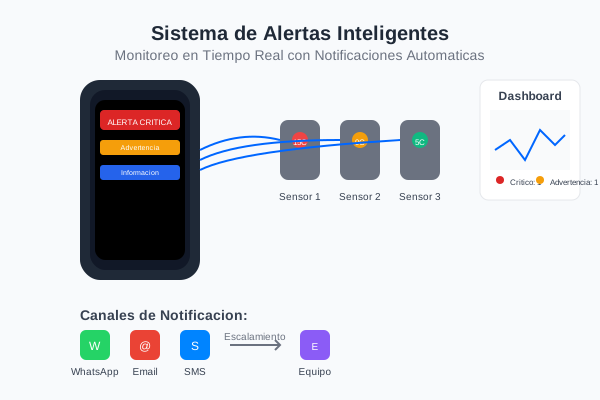
Smart Alert System
SmartTemp implements a tiered alert system:
- Early Alert: Notification when the temperature approaches the limit
- Critical Alert: Immediate activation when limits are exceeded
- Escalation: Notification to supervisors if there is no response within 15 minutes
- Emergency Protocol: Activation of contingency procedures
Documentation and Regulatory Compliance
The system automatically generates:
ROI and Economic Benefits
The investment in smart monitoring is typically recovered in 8-12 months:
Typical ROI Calculation (500m² Pharmacy)
Ready to Protect Your Cold Chain?
Our specialists can help you design the perfect solution for your pharmaceutical operation.