Regulatory compliance in blood banks is not just a legal obligation, but a fundamental commitment to patient safety. International regulations such as FDA 21 CFR Part 11, WHO Guidelines, AABB Standards and ISBT provide the framework needed to ensure the integrity, traceability and quality of blood components.
In this second part of our series, we will explore in detail the specific requirements of each regulatory body, the IQ/OQ/PQ validation processes, and the best practices for preparing successful audits in Latin America.
FDA 21 CFR Part 11: Electronic Records and Signatures
The FDA 21 CFR Part 11 regulation, titled "Electronic Records; Electronic Signatures", establishes the criteria under which the FDA considers electronic records and electronic signatures to be trustworthy, reliable and equivalent to paper records and handwritten signatures.
Fundamental Requirements
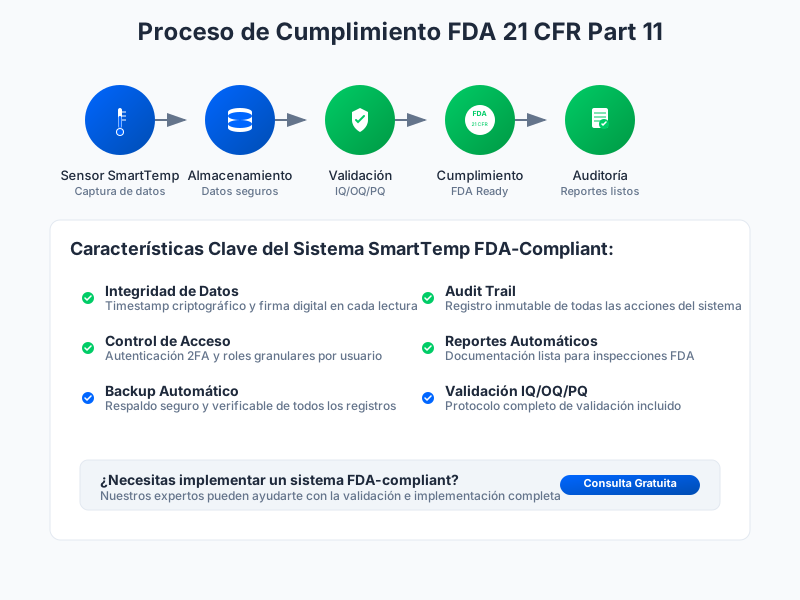
- Data Integrity: Systems must ensure that data cannot be altered without detection
- Audit Trail: Immutable record of all actions performed in the system
- Access Control: Robust authentication and granular permission management
- System Validation: Complete documentation demonstrating that the system works as intended
Regulatory Case
FDA Inspection - Texas Blood Bank (2023): During a routine inspection, the FDA identified deficiencies in the temperature monitoring system that did not comply with 21 CFR Part 11.
Problems found:
- Lack of a complete audit trail
- Users sharing credentials
- Absence of documented validation
Result: Warning Letter and temporary suspension of operations until a compliant system was implemented.
Practical Implementation of 21 CFR Part 11
1. System Validation
Every electronic system must go through a rigorous validation process:
- User Requirements Specification (URS): Clear definition of what the system must do
- Functional Specification (FS): How the system will meet the requirements
- Design Specification (DS): Detailed technical architecture
- Validation Master Plan (VMP): Overall validation strategy
2. Access Control and Security
- Multi-factor authentication: Combination of something you know (password) and something you have (token)
- Role management: Specific permissions according to job function
- Secure sessions: Automatic timeout and encryption of communications
- Periodic review: Quarterly audit of access and permissions
WHO Guidelines: Global Standards
The World Health Organization (WHO) provides global guidelines for blood bank management, focusing on the safety, quality and availability of blood products.
Fundamental WHO Principles
- Voluntary Non-Remunerated Donation: Foundation of a safe and sustainable supply
- Appropriate Donor Selection: Strict criteria to minimize risks
- Screening Tests: Mandatory screening for transmissible pathogens
- Good Manufacturing Practices: Processing under pharmaceutical standards
- Quality Management System: Continuous improvement and process control
Temperature Requirements per WHO
The WHO guidelines specify temperature ranges that are stricter than many local regulations:
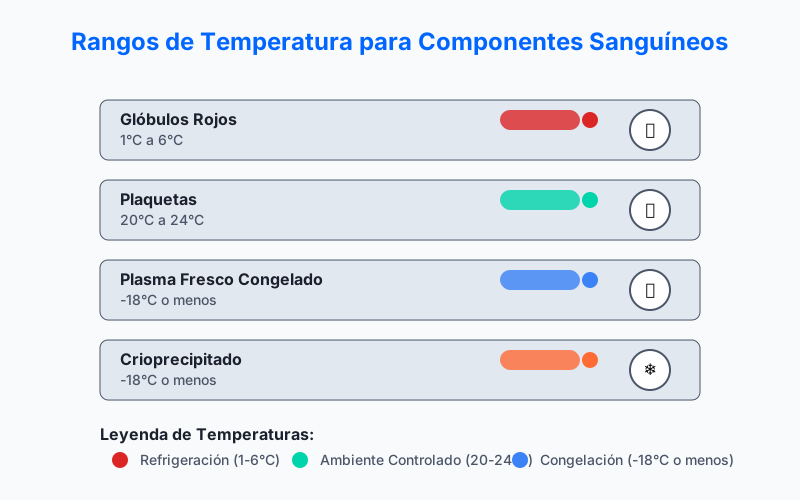
- Red Blood Cells: 2°C ± 2°C (range: 0°C to 4°C)
- Platelets: 22°C ± 2°C with continuous agitation
- Plasma: -25°C or lower for long-term storage
- Transport: Maintenance of the cold chain with continuous monitoring
AABB Standards: The American Gold Standard
The AABB (Association for the Advancement of Blood & Biotherapies) establishes the most recognized standards for blood banks in the Americas, serving as a mandatory reference for accreditation.
Key AABB Standards
Standard 5.1.8.1 - Red Blood Cell Storage
- Temperature: 1°C to 6°C
- Monitoring: Continuous with alarms
- Recording: At least every 4 hours
- Calibration: Annual for all sensors
Standard 5.7.1 - Alarm Systems
- Audible and visual alarms for all deviations
- 24/7 notification to the responsible staff
- Power backup for critical systems
- Monthly tests of operation
AABB Accreditation Process
AABB accreditation is a rigorous process that includes:
- Self-assessment: Internal review against all standards
- Application: Complete documentation of processes and policies
- Inspection: Visit by AABB-certified inspectors
- Follow-up: Correction of identified non-conformities
- Certification: Valid for 2 years with annual inspections
ISBT Guidelines: International Standards
The International Society of Blood Transfusion (ISBT) provides global standards that complement local regulations, especially important for blood banks that operate internationally.
ISBT 128 Coding System
The ISBT 128 system is the international standard for the identification and traceability of blood products:
- Unique identification: Each unit has a unique global code
- Complete traceability: From donor to recipient
- International compatibility: Recognized worldwide
- System integration: Compatible with LIMS and HIS
Regulations Specific to Latin America
COFEPRIS - Mexico
The Federal Commission for the Protection against Sanitary Risks regulates blood banks in Mexico:
- NOM-253-SSA1-2012: Specific regulation for blood banks
- Sanitary License: Renewal every 5 years
- Inspections: Scheduled and unannounced
- Hemovigilance: Mandatory reporting of adverse events
ANMAT - Argentina
The National Administration of Drugs, Foods and Medical Devices:
- Provision 2316/2002: Good practices for blood banks
- National Authorization: Mandatory registration
- National Hemovigilance System: Centralized notification
- Regular audits: Every 2 years minimum
IQ/OQ/PQ Validation: Complete Methodology
The validation of temperature monitoring systems follows the standard three-phase pharmaceutical methodology:
Installation Qualification (IQ)
Verification that the equipment is correctly installed:
- Manufacturer documentation: Manuals, certificates, specifications
- Physical installation: Location, connections, power supply
- Initial configuration: Basic parameters according to specifications
- Component inventory: Detailed list of hardware and software
IQ Example
Hemotherapy Center - Bogotá:
Required IQ documents:
- Factory calibration certificate for sensors
- Electrical installation and network diagrams
- Component checklist
- Initial software configuration
- Connectivity and communication tests
Operational Qualification (OQ)
Demonstration that the system works according to specifications:
- Accuracy tests: Comparison with certified standards
- Alarm tests: Verification of all alarm points
- Communication tests: SMS, email and call notifications
- Backup tests: Operation on battery and generator
OQ Testing Protocol
- Thermal mapping: Measurement at multiple points in the refrigerator
- Recovery test: Time to return to range after opening the door
- Uniformity test: Maximum variation between measurement points
- Alarm test: Activation at upper and lower limits
- Sensor failure test: System response to a faulty sensor
Performance Qualification (PQ)
Verification of performance under real operating conditions:
- Continuous operation: Minimum 30 days of normal operation
- Real load: Tests with a typical inventory of blood products
- Extreme conditions: Operation under boundary environmental conditions
- Emergency procedures: Validation of contingency protocols
Documentation for Audits
Essential Documents
For a successful audit, it is essential to maintain the following documentation:
System Documentation
- User manual: Standard operating procedures
- Technical specifications: Ranges, accuracy, alarms
- System diagrams: Architecture and data flow
- User list: Assigned roles and permissions
Validation Records
- IQ/OQ/PQ protocols: Signed and dated documents
- Validation reports: Results and conclusions
- Calibration certificates: Traceable to national standards
- Change records: Version control and modifications
Operational Records
- Temperature logs: Continuous records with timestamps
- Alarm records: Events, responses and resolutions
- Preventive maintenance: Schedule and execution records
- Staff training: Certifications and updates
Audit Preparation
90 Days Before
- Complete documentation review
- Thorough internal audit
- Correction of identified non-conformities
- Procedure updates
30 Days Before
- Team-specific training
- Audit dry run
- Meeting room preparation
- Organization of physical and digital documents
During the Audit
- Designate a lead coordinator
- Accompany the auditors at all times
- Respond accurately and honestly
- Document all observations
Best Practices for Compliance
Quality Management System
A robust QMS is the foundation of regulatory compliance:
- Quality policy: Management commitment
- Measurable objectives: Specific and achievable KPIs
- Management review: Periodic evaluation of the system
- Continuous improvement: Implemented PDCA cycle
Staff Training
The human factor is critical to compliance:
- Onboarding program: Basic regulations and procedures
- Specific training: Use of monitoring systems
- Continuous updating: Regulatory and technological changes
- Competency evaluation: Periodic certification
Technology for Compliance
Modern systems facilitate automatic compliance:
- Automatic audit trails: Recording of all actions
- Electronic signatures: 21 CFR Part 11 compliance
- Automatic reports: Generation of documents for audits
- LIMS integration: Data flow without manual intervention
Future Regulatory Trends
Digitalization of Regulatory Processes
Regulatory agencies are adopting digital technologies:
- Remote inspections: Virtual audits using IoT and video
- Artificial intelligence: Predictive risk analysis
- Blockchain: Immutable product traceability
- Real-time monitoring: Continuous supervision by regulators
International Harmonization
Trend toward unified global standards:
- ICH guidelines: Adoption in blood products
- Mutual recognition: Acceptance of certifications between countries
- ISO standards: Greater adoption of ISO 15189 and ISO 13485
- Data exchange: Interoperable systems between countries
Need Help with Regulatory Compliance?
Our medical regulations specialists can help you implement a system that complies with FDA 21 CFR Part 11, WHO, AABB and ISBT from day one.
References
- FDA. "21 CFR Part 11 - Electronic Records; Electronic Signatures", Code of Federal Regulations, 2024
- World Health Organization. "Guidelines on Good Manufacturing Practices for blood establishments", WHO Technical Report Series, 2024
- AABB. "Standards for Blood Banks and Transfusion Services", 32nd Edition, 2024
- International Society of Blood Transfusion. "Guidelines for Blood Transfusion Services", 2024
- COFEPRIS. "NOM-253-SSA1-2012, Para la disposición de sangre humana y sus componentes con fines terapéuticos"
- ANMAT. "Disposición 2316/2002 - Buenas Prácticas para Bancos de Sangre"